HA816A is a high-performance vinyl acetate fumaric ester copolymer additive developed by He Ao, designed to significantly improve the low-temperature flow properties of lubricant base oils. Its unique copolymer structure combines vinyl acetate and fumaric acid ester, enabling efficient pour point depression and high shear stability.
The additive works by adsorbing onto wax crystal surfaces and modifying their structure, thereby preventing the formation of a three-dimensional wax network. This action ensures superior cold flow performance, especially in paraffin-based base oils, and maintains compatibility with antioxidants and dispersants without affecting oil clarity or stability.

2. Chemical Properties
- CAS Number: 68954-12-1
- Molecular Formula: (C₄H₆O₂)ₘ·(C₄H₄O₄)ₙ
- Appearance: Colorless or light-colored clear liquid
- pH: Weakly acidic, close to neutral
- Shear Stability Index: < 40
- Active Matter Content: ≥ 35%
- Effective Temperature Range: -30°C to 100°C

3. Application in Lubricants
The vinyl acetate fumaric ester copolymer additive is widely used as a pour point depressant in various lubricant formulations, especially those based on paraffinic oils. Its primary function is to enhance low-temperature fluidity, preventing wax crystal aggregation and improving pumpability in cold conditions.
Vinyl Acetate Fumaric Ester Copolymer Additive Typical applications include:
-
Engine Oils: Improves cold start performance by lowering the pour point, reducing engine wear during startup. Suitable for multi-grade oils like SAE 5W-30 and 10W-40.
-
Hydraulic Oils: Enhances flow characteristics in hydraulic systems operating in low-temperature environments, ensuring reliable equipment response.
-
Gear Oils: Maintains lubricant flow at low temperatures, reducing gear wear and improving transmission efficiency.
-
Refrigeration Oils: Prevents compressor jamming by inhibiting wax crystallization under cold operating conditions.
-
Industrial Lubricants: Suitable for a range of applications requiring stable low-temperature performance and shear resistance.
4. Action Mechanism
The vinyl acetate fumaric ester copolymer additive reduces pour point through eutectic interaction and surface adsorption on wax crystals. By changing wax crystal morphology and inhibiting 3D network structures, it prevents flow restriction at low temperatures and supports stable lubrication.
5. Recommended Dosage
Typical treat rate: 0.1%–1.0%, depending on base oil and application.
Example: 0.5% HA816A reduces the pour point of Daqing 150SN from -14°C to -28°C.
6. Comparative Performance
Compared with PMA-based pour point depressants, HA816A offers:
- Lower cost
- Similar performance
- Broader application range
- Excellent mechanical shear resistance
- Better compatibility in mixed additive packages
7. Technical Specifications
| ITEM |
TYPICAL VALUE |
TEST METHOD |
| Appearance |
Colorless or light color clear liquid |
Visual |
| Color, Scale |
≤3.0 |
GB/T 6540 |
| Kinematic Viscosity (100℃), mm²/s |
Report |
NB/SH/T0870, ASTM D7042 |
| Flash Point (COC), ℃ |
≥90 |
GB/T 3536, ASTM D92 |
| Degree of decreasing pour point, ℃ |
≥15 |
GB/T 510 |
8. Recommended Uses
- Hydraulic oils & Gear oils (for paraffin-based base oils)
- Engine oils (e.g., SAE 5W-30, 10W-40)
- Refrigeration oils
- Acid wash oils & Cable oils
- Crude oil pour point & viscosity reduction
9. Packaging & Storage
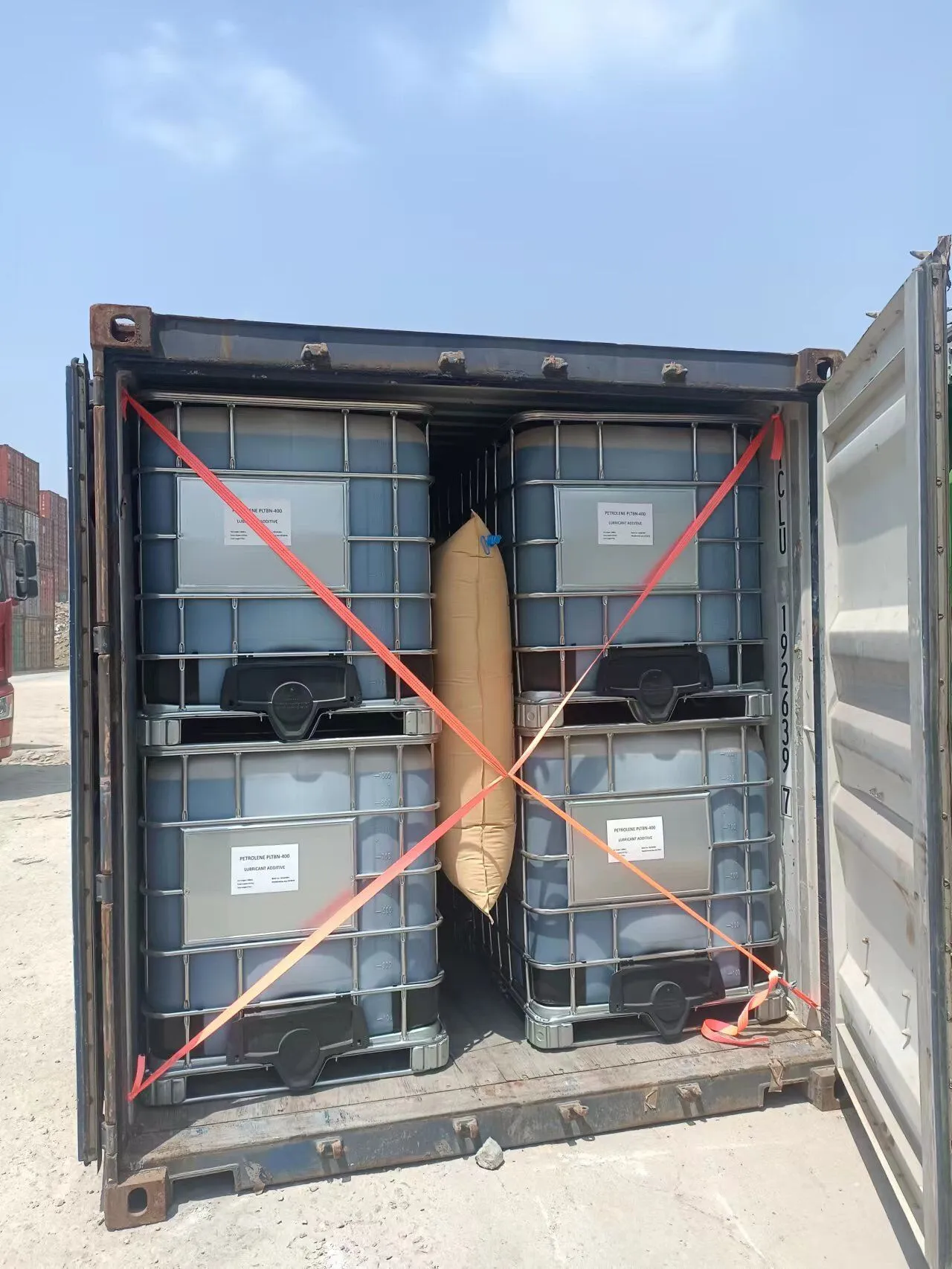
HA816A is available in 200L drums or 1000L IBCs.
Storage Conditions: Store in cool, dry, ventilated areas below 45°C
Shelf Life: 24 months from production date
Handling: Non-corrosive and compatible with standard lubricant additive systems
10.FAQ / Downloads
Q1: Can HA816A replace PMA-type pour point depressants?
Yes, HA816A provides comparable low-temperature performance at a lower cost and with high compatibility.
Q2: Is HA816A suitable for high-wax base oils?
Yes, it performs effectively in paraffin-based base oils and crude oil transport applications.
Q3: Does HA816A affect oxidation inhibitors or dispersants?
No, it maintains stability and transparency without interfering with other additive functions.
For technical documents, contact He Ao.


